


2026 Honda Ridgeline Dimensions: Bed Length, Width & Cargo Capacity

Need a midsize pickup truck that has the cargo heft of a much larger vehicle? The Honda Ridgeline is your answer. In a remarkably tight package, the Ridgeline delivers more truck bed area and passenger space than its closest competitors. Not only that, it includes loads of exclusive (and brilliant) features that expand its capabilities well beyond what seems possible, from its in-bed trunk to thoughtful interior storage solutions like extra bins and cupholders. Truly, no detail was overlooked in the Ridgeline when it came to making the most of its available space. The experts clearly agree, including Edmunds test driver Cameron Rogers, who noted that “the Ridgeline has a more useful cabin than other pickups” while giving the Ridgeline a perfect 10/10 score for its storage and cargo capabilities*.
What are the specifics behind that magic? The team at Germain Honda of Naples has assembled this guide, including every Honda Ridgeline measurement you could possibly need, in an effort to show how it’s the perfect truck for practical, everyday use. Let’s dive in.

Ridgeline Bed Length, Width, and Dimensions
Figuring out the dimensions for the bed of a Honda Ridgeline is incredibly easy, because there isn’t any variation between trim levels, nor are there different cab and bed length combinations to take into account.
| Width | Between bed walls | 60.0 inches |
| Between wheel wells | 50.0 inches | |
| At D-pillar/just inside tailgate | 51.0 inches |
| Length | Tailgate up | 64.0 inches |
| Tailgate down | 83.0 inches |
| Depth | Midpoint | 16.7 inches |
All told, the Ridgeline bed’s width, length, and depth produce a cargo volume of 33.9 cubic feet.
Honda Ridgeline Truck Bed Features and Innovations
Pure size is great, but what truly sets the Honda Ridgeline apart is the way that it innovates within its space. That includes the groundbreaking in-bed trunk, which adds an additional 7.3 cubic feet of storage space underneath the floor of the truck bed, a dual-action tailgate that opens both horizontally and vertically, and numerous other ways that the Ridgeline makes the most of what it has to offer.
Exterior Truck Dimensions and Passenger Space
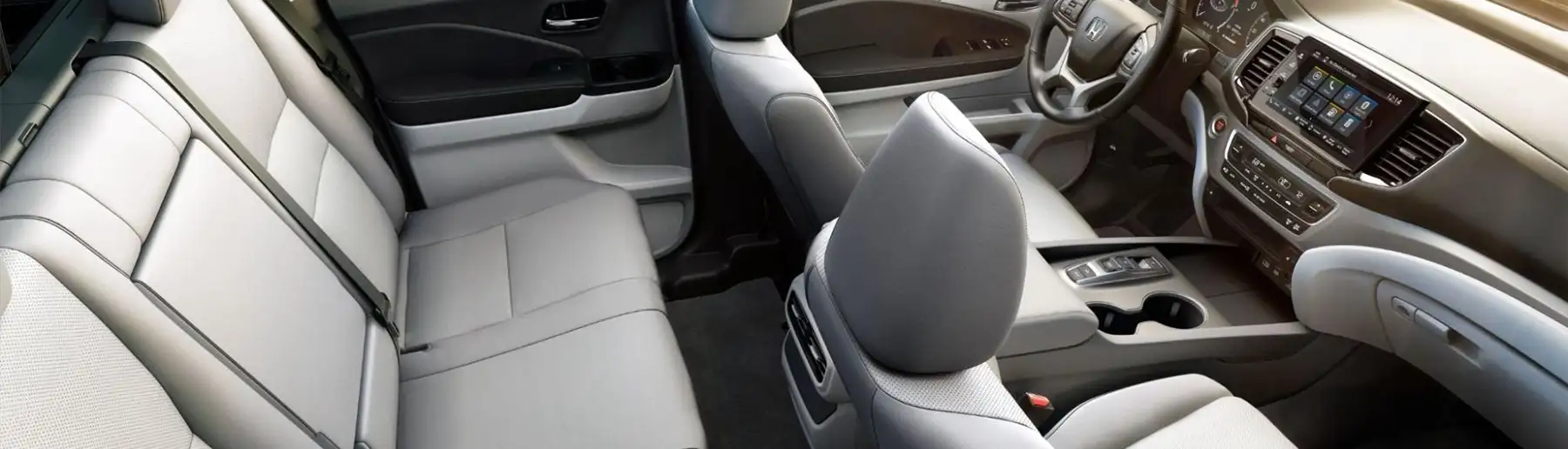
There are relevant dimensions to the Honda Ridgeline outside of its bed size, of course, including the overall measurements of its body, and the interior space afforded each passenger.
Exterior Honda Ridgeline Size
| Height | Width (without mirrors) | Length | Wheelbase |
| 70.8 inches | 78.6 inches | 210.2 inches | 125.2 inches |
Honda Ridgeline Passenger Space
| Headroom | Legroom | Shoulder Room | Hip Room | |
| Front Seats | 40.1 inches | 40.9 inches | 62.0 inches | 59.1 inches |
| Rear Seats | 38.8 inches | 36.7 inches | 61.5 inches | 56.6 inches |

Payload, Cargo, and Everyday Utility
Finally, there are a few other important numbers to know related to the Ridgeline’s ability to carry people and things, beyond pure volume.
- Maximum Towing Capacity: 5,000 pounds
- Curb Weight: 4,420 pounds
- Payload Capacity: 1,583 pounds
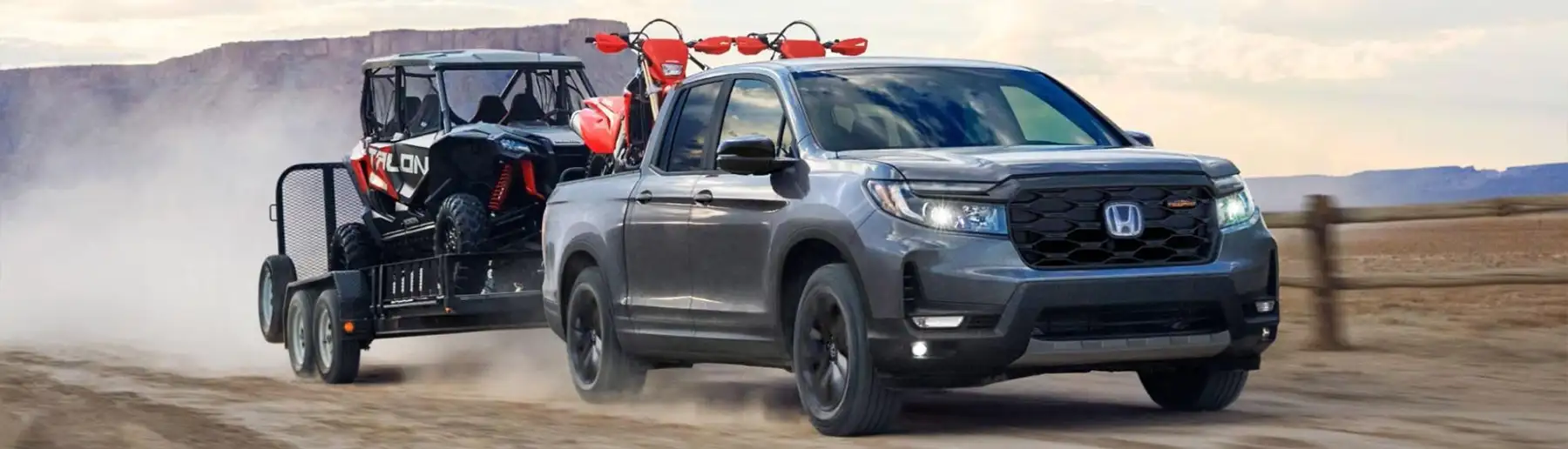
For context, a 5,000-pound towing capacity is enough to handle a small or medium camper, most small watercraft and jet skis, and a utility trailer with ATVs or landscaping equipment.
Meanwhile, it’s important to keep in mind that the payload capacity figure includes passengers and the tongue weight from any trailers used. So, for example, with two 200-pound people in the cab and a small trailer with a 400-pound tongue weight attached to the back, that leaves up to 783 pounds of cargo that can safely be carried in the bed or elsewhere.
Is the Ridgeline Big Enough for Your Needs?
Put it this way: if the Honda Ridgeline isn’t big enough for your needs, then you’re probably not actually in the market for a midsize pickup. Repeatedly, and on every size and cargo dimension, the Ridgeline blows away its primary rivals.
| 2026 Honda Ridgeline Crew Cab | 2026 Toyota Tacoma Double Cab | 2026 Chevrolet Colorado Crew Cab | 2026 Nissan Frontier Crew Cab | |
| Edmunds Storage & Cargo Rating | 10.0 ✔ | 8.5 | 3.0 | 6.0 |
| Bed Length (tailgate up) | 64.0 inches ✔ | 60.0 inches | 62.0 inches | 60.0 inches |
| Bed Width (at wheel wells) | 50.0 inches ✔ | 44.7 inches | 45.5 inches | 44.5 inches |
| Rear Headroom | 38.8 inches ✔ | 38.4 inches | 38.3 inches | 38.6 inches |
| Rear Legroom | 36.7 inches ✔ | 33.7 inches | 34.7 inches | 33.2 inches |
| Rear Shoulder Room | 61.5 inches ✔ | 57.8 inches | 56.1 inches | 58.3 inches |
| In-Bed Trunk | Standard ✔ | Not Available | Not Available | Not Available |
| Dual-Action Tailgate | Standard ✔ | Not Available | Not Available | Not Available |
As you can see, the Honda Ridgeline offers more volume in its bed than the Tacoma, Colorado, or Frontier, and also allows more space for the always-contentious back row in a pickup truck’s cab. What’s truly astonishing here is that the Ridgeline manages to accomplish all of this while actually being the smallest vehicle of the four compared here — the Frontier is the second smallest, checking in at 2.1 inches taller than the Ridgeline and with an equal length, but a slightly longer wheelbase.
*Source: Edmunds 2026 Honda Ridgeline review (https://www.edmunds.com/honda/ridgeline/2026/)